
Let me tell you about one of the kindest homeowners we’ve ever worked with. After Hurricane Milton hit, she let our team not only work on her home but actually stay there while we completed the remediation. If you’ve ever tried to book a hotel after a storm, you know — that offer was a lifesaver.
This woman was gracious, generous, and incredibly thoughtful. She had already gone through the ringer with Hurricane Helene just a few weeks before. The walls had already been cut, the initial muck removed, but now… here comes Round Two.
Our job? Finish the dry-out, clean out new muck in the wall cavities, and sanitize everything properly.

The Catch: She Wanted to Use Her Own Dehumidifiers
And listen — we get it.
After two hurricanes, you’re looking to save where you can.
She asked if we could use her DIY dehumidifier to help with the drying process. Totally fair question. I even have one at my own house — it keeps the humidity down in the summer and works great. Quiet, efficient, no complaints.
But here’s the difference:
Her at-home dehumidifier?
Perfect for a small bedroom with damp air.
Not so perfect when you’re about to intentionally soak a property to clean out wall cavities.

Wait, Why Are We Adding Water?
Great question.
In order to properly clean and sanitize, we have to make it rain — inside.
We introduce moisture to dislodge bacteria, biofilm, and contaminants before extraction.
So if you’re going to flood a home to clean it, you’d better have the right power to dry it out fast — or else you’re just setting up a cozy Airbnb for mold.
Mold Moves Fast — Like, 24–48 Hours Fast
If we had relied on her personal dehumidifier, we’d be facing:
🚫 Open wall cavities
🚫 High humidity
🚫 Outdoor exposure
🚫 Lingering muck
That’s a perfect cocktail for mold growth, and using the wrong equipment would have made us negligent. Period.
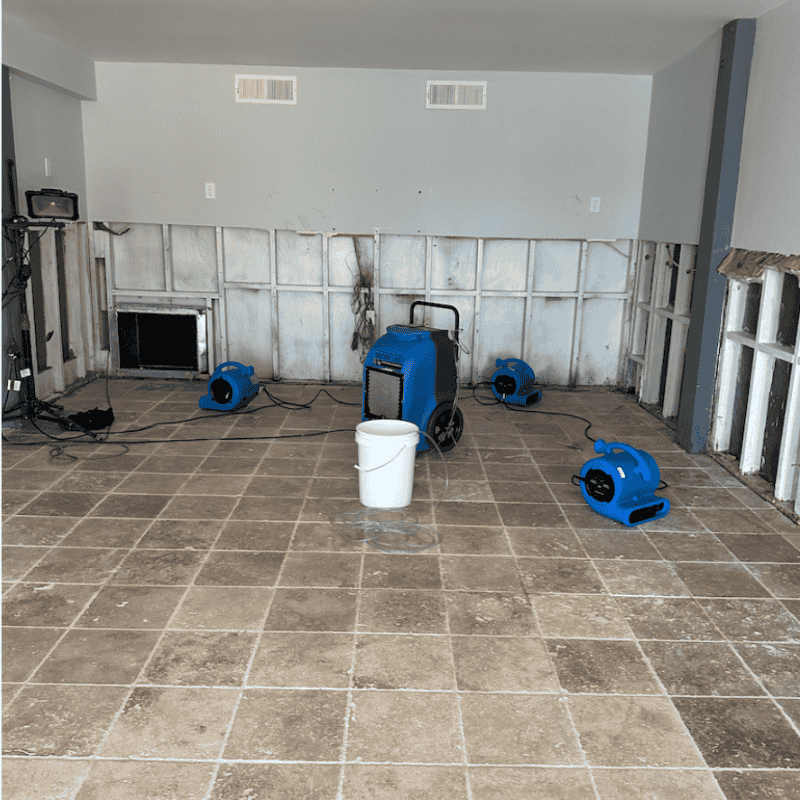
So We Made an Executive Call: Bring in the Big Guns
We rolled in our professional-grade Dri-Eaz 1200 and Dri-Eaz LGR units. Here’s why:
- Dri-Eaz 1200: Removes up to 145 pints of water per day
- Dri-Eaz LGR: Removes up to 140 pints per day
- Both can take moisture in materials like wood from 99% down to 12% — fast.
These aren’t your weekend hobby machines.
They’re designed for storm-damaged properties, wide open cavities, and serious drying timelines.
DIY Dehumidifiers: Great for Homes, Not for Disasters
Let’s be clear — we’re not against personal dehumidifiers. In fact:
Are at-home dehumidifiers worth it? HECK YES.
I use one myself. Great for bedrooms, summer humidity, even to keep closets fresh.
But when you’re talking post-storm flood restoration,
using a DIY dehumidifier is like trying to empty a pool with a spoon.
What It Could Cost You in the Long Run
Trying to save a few bucks on equipment could cost you a lot more in the end:
💸 Mold remediation costs
💸 Health-related repairs
💸 More demo (because mold creeps everywhere)
💸 Insurance complications if drying wasn’t properly documented
Not to mention the stress, the smell, and the “I should’ve just let them do it” regret.

Final Thought
We love clients who are proactive. Who think ahead. Who want to be involved. That’s what partnership looks like. But when it comes to post-hurricane dry-outs, the tools matter just as much as the technique.
Your home deserves to be clean, dry, and safe — not just “almost dry.”
So if you’re ever wondering whether your personal dehumidifier can handle the job…
just ask:
“Am I trying to clean up some moisture — or am I remediating after a hurricane?”
Because those are two very different answers.
Need help figuring out if your dry-out is being done right?
We’re happy to talk tools, timelines, and your next best step.
Curious about DIY tools and materials? Here is our Amazon list.
(And no, we won’t judge your dehumidifier. We’ve got one at home too.)
Ready to Get Started?
Let us take the stress out of submitting documentation for our part of the job.
Call us at 844‑238‑9525 or email hello@responderrestoration.com to schedule your free consultation.